Journey from unknown to the Known

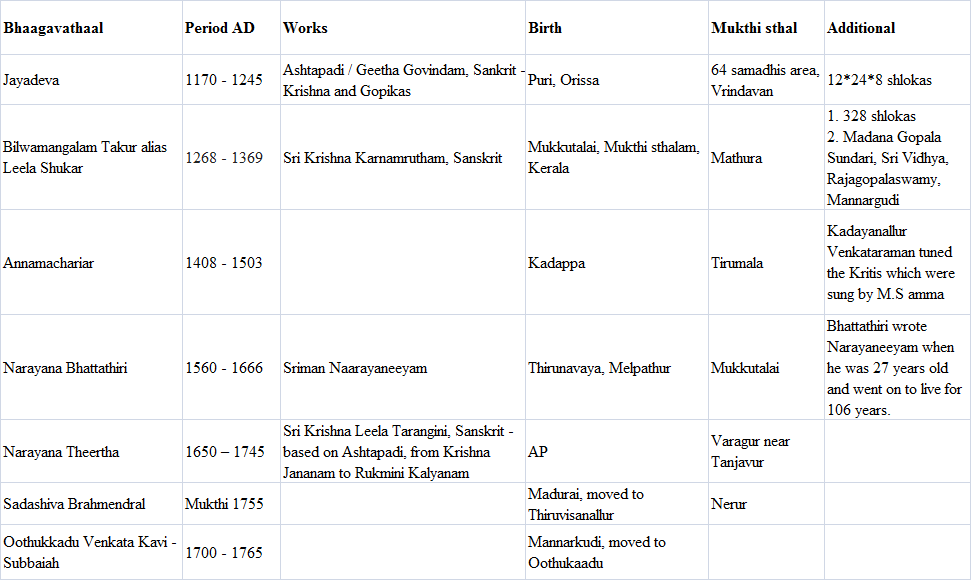
The following is a depiction based on the text Tattvabodha of Adi Shankaracharya. Brahman as the underlying canvas, Maya is on top of it. The elements are interconnected, from Akasha to Vayu to Agni etc.

Color coded to indicate gyanendriyas are from Sattva guna and karmendriyas are from rajo guna and black for tamo guna.

Kaarana shareera pervades the sookshma shareera to the much grosser sthoola shareera. Jagrat and Swapna on sukshma shareera.

Journey from unknown to the Known

Bhagavatam shlokas during Narayaneeyam parayanam

The following are the list of additional shlokas chanted during the parayanam of Sriman Narayaneeyam. While most are from Srimad Bhagavatam, some are also from other texts like Krishna Karnamrutham etc.

Also, at the end of the corresponding Skandam of Srimad Bhagavantam, Namaskara shlokam from dasakam 98 is chanted.

After Daskam 3,1st Skandam of Bhagavatam ends D98.1 to be chanted

After Dasakam 7,end of 2nd SkandamD98.2 to be chanted

After D15D98.3

After D17.11 (Dhruva Stuti)SB.4.9.6
योऽन्तःप्रविश्य मम वाचमिमां प्रसुप्तां
सञ्जीवयत्यखिलशक्तिधरः स्वधाम्ना ।
अन्यांश्च हस्तचरणश्रवणत्वगादीन्
प्राणान् नमो भगवते पुरुषाय तुभ्यम् ॥

After D19D98.4

After D21D98.5

After D23D98.6

After D25.10 (Narasimha avataram)
उग्रं वीरं महाविष्णुं ज्वलन्तं सर्वतोमुखम्।
नृसिंहं भीषणं भद्रं मृत्युमृत्युं नमाम्यहम् ॥

After D25D98.7

After D32D98.8

Before starting Rama avataram – SB.11.5.33, 34
ध्येयं सदा परिभवघ्नं अभीष्टदोहं
तीर्थास्पदं शिव विरिञ्चिनुतं शरण्यम् ।
भृत्यार्तिहं प्रणतपाल भवाब्धिपोतं
वन्दे महापुरुष ते चरणारविन्दम् ॥३३॥

त्यक्त्वा सुदुस्त्यज सुरेप्सित राज्यलक्ष्मीं
धर्मिष्ठ आर्यवचसा यदगादरण्यम् ।
मायामृगं दयितयेप्सितं अन्वधावद्
वन्दे महापुरुष ते चरणारविन्दम् ॥३४॥

After D36D98.9

After D37-S10 – Garbha StutiSB.10.2.26
सत्यव्रतं सत्यपरं त्रिसत्यं
सत्यस्य योनिं निहितं च सत्ये ।
सत्यस्य सत्यमृत सत्यनेत्रं
सत्यात्मकं त्वां शरणं प्रपन्नाः ॥ २६॥

D38-S2 – Sri Krishna avataramSB.10.3.9 & 10
तमद्भुतं बालकमम्बुजेक्षणं
चतुर्भुजं शङ्ख गदाद् युदायुधम् ।
श्रीवत्सलक्ष्मं गलशोभि कौस्तुभं
पीताम्बरं सान्द्र पयोद सौभगम् ॥ ९॥
महार्हवैदूर्य किरीट कुण्डलत्विषा
परिष्वक्त सहस्रकुन्तलम् ।
उद्दाम काञ्च्यङ् गद कङ्कणादिभि-
र्विरोचमानं वसुदेव ऐक्षत ॥ १०॥

After D48.7 – SB.10.10.38 – (NalaKubara & Manigreeva Stuti)
वाणी गुणानुकथने श्रवणौ कथायां
हस्तौ च कर्मसु मनस्तव पादयोर्न: ।
स्मृत्यां शिरस्तव निवासजगत्प्रणामे
द‍ृष्टि: सतां दर्शनेऽस्तु भवत्तनूनाम् ॥ ३८ ॥

Before starting D52 – SB.10.13.11
बिभ्रद्वेणुं जठरपटयोः श‍ृङ्गवेत्रे च कक्षे
वामे पाणौ मसृण कवलं तत्फलान्यङ्गुलीषु ।
तिष्ठन्मध्ये स्वपरि सुहृदो हासयन् नर्मभिः स्वैः
स्वर्गे लोके मिषति बुभुजे यज्ञ भुग्बालकेलिः ॥

D52-S10 – SB.10.14.32
अहोभाग्यं अहोभाग्यं नन्दगोप व्रजौकसाम् ।
यन्मित्रं परमानन्दं पूर्णं ब्रह्म सनातनम् ॥ ३२॥

Before starting Venu Ghaanam D59 – SB.10.21.5
बर्हापीडं नटवरवपुः कर्णयोः कर्णिकारं
बिभ्रद्वासः कनककपिशं वैजयन्तीं च मालाम् ।
रन्ध्रान् वेणोरधर सुधया पूरयन् गोपवृन्दै:
वृन्दारण्यं स्वपद रमणं प्राविशद् गीतकीर्तिः ॥

D59-S10–Krishna Karnamrutham – 2.22
व्यत्यस्त पादम् अवतंसित बर्हिबर्हम्
साची कृतानन निवेशित वेणुरन्ध्रम्।
तेजः परम् परम कारुणिकम् पुरस्तात्
प्राण प्रयाण समये मम सन्निधत्ताम्॥ २-२२

D60-S2 – SB.10.22.4
कात्यायनि महामाये महायोगिन्यधीश्वरि ।
नन्दगोपसुतं देवि पतिं मे कुरु ते नमः ।।

D67-S8 – SB.10.30.44 & 45
तन्मनस्का: तदालापा: तद्विचेष्टा: तदात्मिकाः ।
तद्गुणानेव गायन्त्यो नात्मा गाराणि सस्मरुः ॥
पुनः पुलिनमागत्य कालिन्द्याः कृष्णभावनाः ।
समवेता जगुः कृष्णं तदागमन काङ्क्षिताः ॥

Click here for Gopika Geetham

D76-S11 – SB.10.47.63
वन्दे नन्द व्रजस्त्रीणां पादरेणुं अभीक्ष्णशः ।
यासां हरि कथोद् गीतं पुनाति भुवनत्रयम् ॥

D85-S5 – (Sharanagathi by 20,800 Kings)SB.10.73.16
कृष्णाय वासुदेवाय हरये परमात्मने ।
प्रणतक्लेश नाशाय गोविन्दाय नमो नमः ॥ १६॥

D86-S4- Draupadi Sharanagathi (Vastra avataram)
हा कृष्ण द्वारका वासिन् क्वासि देवकी नन्दन |
इमांऽवस्थां सम्प्राप्तं अनन्तम् किं उपेक्ष्यसि ||

शङ्ख चक्र गदा पाणे द्वारका निलयाच्युत |
गोविंद पुंडरीकाक्ष रक्ष मां शरणागतं ||

D97.7- Bala Mukunda Swamy darshan to Markandeyar
करारविन्देन पदारविन्दं
मुखारविन्दे विनिवेशयन्तम् ।
वटस्य पत्रस्य पुटे शयानं
बालं मुकुन्दं मनसा स्मरामि ॥

After D90D98.10

After D97.4.2nd line (end of ekadasa skandam) – D98.11 to be chanted

नारायण अखिल गुरो भगवन् नमस्ते ।

Namaskara Shlokas

The following are the Namasakara shlokas of Sriman Narayaneeyam. While doing Parayanam of dasakam 98, these shlokas are chanted along with a namaskaram for each shloka.

यस्मिन्नेतद्विभातं यत इदमभवत्
येन चेदं य एत-द्योऽस्मादुत्तीर्णरूप:
खलु सकलमिदं भासितं यस्य भासा ।
यो वाचां दूरदूरे पुनरपि मनसां
यस्य देवा मुनीन्द्रा:
नो विद्युस्तत्त्वरूपं किमु पुनरपरे
कृष्ण तस्मै नमस्ते ॥98-1॥

जन्माथो कर्म नाम स्फुटमिह गुणदोषादिकं
वा न यस्मिन्
लोकानामूतये य: स्वयमनुभजते
नि मायानुसारी ।
विभ्रच्छक्तीररूपोऽपि च
बहुतररूपोऽवभात्यद्भुतात्मा
तस्मै कैवल्यधाम्ने
पररसपरिपूर्णाय विष्णो नमस्ते ॥२॥

नो तिर्यञ्चन्न मर्त्यं न च सुरमसुरं
न स्त्रियं नो पुंमांसं
न द्रव्यं कर्म जातिं गुणमपि
सदसद्वापि ते रूपमाहु: ।
शिष्टं यत् स्यान्निषेधे
सति निगमशतैर्लक्षणावृत्तितस्तत्
कृच्छ्रेणावेद्यमानं
परमसुखमयं भाति तस्मै नमस्ते ॥३॥

मायायां बिम्बितस्त्वं
सृजसि महदहङ्कारतन्मात्रभेदै-
र्भूतग्रामेन्द्रियाद्यैरपि
सकलजगत्स्वप्नसङ्कल्पकल्पम् ।
भूय: संहृत्य सर्वं कमठ इव
पदान्यात्मना कालशक्त्या
गम्भीरे जायमाने तमसि
वितिमिरो भासि तस्मै नमस्ते ॥४॥

शब्दब्रह्मेति कर्मेत्यणुरिति
भगवन् काल इत्यालपन्ति
त्वामेकं विश्वहेतुं सकलमयतया
सर्वथा कल्प्यमानम् ।
वेदान्तैर्यत्तु गीतं पुरुष
परचिदात्माभिधं तत्तु तत्त्वं
प्रेक्षामात्रेण मूलप्रकृतिविकृतिकृत्
कृष्ण तस्मै नमस्ते ॥५॥

सत्त्वेनासत्तया वा न च खलु
सदसत्त्वेन निर्वाच्यरूपा
धत्ते यासावविद्या
गुणफणिमतिवद्विश्वदृश्यावभासम् ।
विद्यात्वं सैव याता
श्रुतिवचनलवैर्यत्कृपास्यन्दलाभे
संसारारण्यसद्यस्त्रुटन
परशुतामेति तस्मै नमस्ते॥६॥

भूषासु स्वर्णवद्वा जगति
घटशरावादिके मृत्तिकाव-
त्तत्त्वे सञ्चिन्त्यमाने स्फुरति
तदधुनाप्यद्वितीयं वपुस्ते ।
स्वप्नद्रष्टु: प्रबोधे तिमिरलयविधौ
जीर्णरज्जोश्च यद्व-
द्विद्यालाभे तथैव स्फुटमपि
विकसेत् कृष्ण तस्मै नमस्ते ॥७॥

यद्भीत्योदेति सूर्यो दहति च दहनो
वाति वायुस्तथान्ये
यद्भीता: पद्मजाद्या:
पुनरुचितबलीनाहरन्तेऽनुकालम् ।
येनैवारोपिता: प्राङ्निजपदमपि ते
च्यावितारश्च पश्चात्
तस्मै विश्वं नियन्त्रे वयमपि भवते
कृष्ण कुर्म: प्रणामम् ॥८॥

त्रैलोक्यं भावयन्तं
त्रिगुणमयमिदं त्र्यक्षरस्यैकवाच्यं
त्रीशानामैक्यरूपं त्रिभिरपि
निगमैर्गीयमानस्वरूपम् ।
तिस्रोवस्था विदन्तं
त्रियुगजनिजुषं त्रिक्रमाक्रान्तविश्वं
त्रैकाल्ये भेदहीनं
त्रिभिरहमनिशं योगभेदैर्भजे त्वाम् ॥९॥

सत्यं शुद्धं विबुद्धं
जयति तव वपुर्नित्यमुक्तं निरीहं
निर्द्वन्द्वं निर्विकारं
निखिलगुणगणव्यञ्जनाधारभूतम् ।
निर्मूलं निर्मलं
तन्निरवधिमहिमोल्लासि निर्लीनमन्त-
र्निस्सङ्गानां मुनीनां
निरुपमपरमानन्दसान्द्रप्रकाशम् ॥१०॥

दुर्वारं द्वादशारं
त्रिशतपरिमिलत्षष्टिपर्वाभिवीतं
सम्भ्राम्यत् क्रूरवेगं
क्षणमनु जगदाच्छिद्य सन्धावमानम् ।
चक्रं ते कालरूपं
व्यथयतु न तु मां त्वत्पदैकावलम्बं
विष्णो कारुण्यसिन्धो
पवनपुरपते पाहि सर्वामयौघात् ॥98-11॥

यत्तु त्रैलोक्यरूपं
दधदपि च ततो निर्गतोऽनन्तशुद्ध-
ज्ञानात्मा वर्तसे त्वं
तव खलु महिमा सोऽपि तावान् किमन्यत् ।
स्तोकस्ते भाग एवाखिल
भुवनतया दृश्यते त्र्यंशकल्पं
भूयिष्ठं सान्द्रमोदात्मकमुपरि
ततो भाति तस्मै नमस्ते ॥99-9॥

अव्यक्तं ते स्वरूपं
दुरधिगमतमं तत्तु शुद्धैकसत्त्वं
व्यक्तं चाप्येतदेव
स्फुटममृतरसाम्भोधिकल्लोलतुल्यम् ।
सर्वोत्कृष्टामभीष्टां तदिह
गुणरसेनैव चित्तं हरन्तीं
मूर्तिं ते संश्रयेऽहं
पवनपुरपते पाहि मां कृष्ण रोगात् ॥99-10॥

नारायण अखिल गुरो भगवन् नमस्ते ।

Narayana Kavacham

Narayana Kavacham occurs in Srimad Bhagavatham 6th canto, 8th chapter. The following are for a quick reference of the meanings. The various naamaas of Narayana used in this Kavacham, all His weapons, Vahanaa and His Roopa dhyanam makes it a powerful mantra and protects the one who recites, from all directions, at all times.

S.B.6.8.12
Roopa dhyanam: Lord Narayana with His lotus feet on the back of Garuda with 8 hands and 8 sidhis
4 right hands
Sudarshana chakram
– thigiri – becomes manas
Nandakam – sword – Gyana – its sheath is agyana, covered by ignorance
Arrows – 10 irudeegam , Hrisheeka – sense organs 5*2
Paasham

4 left hands
Koumodhaki – gada – becomes budhi
Paancha janyam – conch – tamasa ahankaram – five elements
Shield – marked with multiple moon like circles
Saranga – bow – raajasa ahankaram

Garuda – Veda swarupam

S.B.6.8.13
Protected by Matsya murthi – on water
Vamana – on land
Vishwarupa – on the sky

S.B.6.8.14
Narasimha
– protect me in all directions, forest and battle front

S.B.6.8.15
Varaha murthi – from troubles on the street
Parasurama – on top of the mountains
Sri Rama – on foreign lands

S.B.6.8.16
Narayana – from false religious systems
Nara – from pride
Dattatreya – – from falling into mystic powers while doing bakthi yoga
Kapila – from bondage

S.B.6.8.17
Sanat Kumara – from lust and desire
Lord Hayagriva – from turning away from God, Brahmanas etc.
Narada – Narada Pancha-ratra (principles of doing pooja), 32 offenses in worships
Kurma – from falling into various hellish planets

S.B.6.8.18
Dhanvantari – from undesirable eatbales
Rishabadevar – from fear of duality of heat and cold
Yagya (Narayana as lord of sacrifice) – from infamy and undesirable social positions
Balarama – from serpents and envious people

S.B.6.8.19
Vyasadeva – from ignorance and give Vedic knowledge
Lord Budha – from madness of aetheist influencing bakthas
Kalki Bhagavan – from the illusions of Kali in kali yuga

Day is divided into 6 parts, of 2 hrs each.
Every 2 hrs is divided into 5 ghatikas of 24 minutes each, so 2 hrs will have 5*24=120 minutes. Same for night. Next 3 shlokas explain the various forms of Lord Narayana protecting during the day.

S.B.6.8.20
Kesava(of Mathura)- Gada(Koumodaki) – early morning -6 to 8 am
Govinda (of Vrindavan) – Flute – morning – 8 to 10 am
Narayana– morning -10 to noon
VishnuChakra (Sudarshana) – Noon – 12 to 2 pm

S.B.6.8.21
Madhusudhana Bow (Saranga) – Fifth part of day – 2 to 4 pm
Madhava (trinity) – Post noon – 4 to 6 pm
Hrishikesha – Beginning of night – 6 to 8 pm
Padmanabha – 2nd & 3rd part of night – 8 to 12 am

S.B.6.8.22
Lord with Srivatsa mark -4th part of night, post midnight -12 to 2 am
JanardhanaSword (Nandaka) – end of night for 4 ghatikas only i.e. 24*4=96 minutes – 2 to 3:36 am
Damodara – beginning of early dawn (1 ghatika time) – 3:36 am to 4 am – 24 min
Vishveshwara – junction of night and morning – 4 to 6 am

S.B.6.8.23
Sudarshana Chakra – let it burn the enemies to ashes

S.B.6.8.24
Gada (Koumodhaki) – protect from evil beings such as kusmandas, vainayakas, yaksas, raksasas, bhutas and grahas.

S.B.6.8.25
Conch (Panchajanya) – from raksasas, ghosts, pretas, matas, pisasas

S.B.6.8.26
Sword and Shield – marked with a hundred shining moons, blinds the eyes of the evil-minded ones so full of anger and pluck out their sinful eyeballs!

S.B.6.8.27-28
Bhagavan Nama Rupa (Hare Krishna Maha Mantra) – protect from bad planets, meteors, envious human beings, serpents, scorpions and animals like tigers and wolves.
– also from ghosts and material elements like earth, water, fire and air
– also from lightning and our past sins
– no hindrances to our auspicious life

S.B.6.8.29
Lord Garuda – Vedas – from unlimited miseries
Lord Vishwaksena – from all dangers

S.B.6.8.30 – Advaya gyana
Nama, Roopa, Vaahana, Ayudha – protect our intelligence, senses, mind and pranan from all dangers. The Lord is called Advaya gyana, indicating there is no difference between Him and His (Nama, Rupa, Vaahana and weapons).

S.B.6.8.31
Bhagavaan = subtle and gross cosmic manifestation. He is the cause of all causes and He is the effect.

S.B.6.8.32-33
Bhagavaan = living entities, material energy, spiritual energy and the entire creation of all individual substances.
May He always protect us everywhere from all calamities.

S.B.6.8.34
(Prahlada’s) Narasimha – protect us from all fear of dangers in all directions, in all corners, above, below, within and without – protect us from poison, weapons, water, fire and air

नारायण अखिल गुरो भगवन् नमस्ते ।

Protection from samsara

The following shlokas are from Srimad Bhagavatam where the material world, samsara is described as a deep blind well (कूप) and how one can be protected from falling into the deep pit.

S.B. 7.5.5 – Prahlada said:
तत्साधु मन्येऽसुरवर्य देहिनां
सदा समुद्विग्नधियामसद्ग्रहात्।
हित्वात्मपातं गृहमन्धकूपं
वनं गतो यद्धरिमाश्रयेत ॥५॥
Sri Prahlada said: ‘Fine, oh King of the Asuras, I think that every embodied soul always has a mind full of worries because he is imprisoned in the material world. When one wants to get rid of that covering of the soul, that worldly concern which is nothing but a blind well, one better heads for the forest and seeks refuge with the Lord.’

S.B. 7.9.28 – Prahlada said:
एवं जनं निपतितं प्रभवाहिकूपे
कामाभिकाममनु यः प्रपतन् प्रसङ्गात्।
कृत्वाऽऽत्मसात्सुरर्षिणा भगवन् गृहीतः
सोऽहं कथं नु विसृजे तव भृत्यसेवाम् ॥ २८॥
The common man who in his material existence fell into a blind well full of snakes, runs after the objects of his desire. I, who by bad association just like such a person fell into that condition, was by the Sura sage [Narada], oh Supreme Lord, taken into confidence and led to the truth of the soul. How could I ever give up on the service of Your pure devotee?

S.B. 7.15.46 – Narada said:
नोचेत्प्रमत्तमसदिन्द्रियवाजिसूता
नीत्वोत्पथं विषयदस्युषु निक्षिपन्ति,
ते दस्यवः सहयसूतममुं तमोऽन्धे
संसारकूप उरुमृत्युभये क्षिपन्ति ॥४६॥
Not doing so being inattentive and motivated for what is untrue, the senses that act as the horses will lead the charioteer on the road of desire. There the driver falls into the hands of rogues, the sense objects [who rule with vishaya, eating, sleeping and mating] because of whom he, together with the horses and the rest, will land in the dark, blind well of material existence and suffer the great fear of death.

S.B. 10.51.46
लब्ध्वा जनो दुर्लभमत्र मानुषं
कथञ्चिदव्यङ्गमयत्नतोऽनघ ।
पादारविन्दं न भजत्यसन्मति-
र्गृहान्धकूपे पतितो यथा पशुः ॥४७॥
Muchukundan said: ‘The person who somehow or other in this world attains the rarely obtained, highly evolved human form of life and not an idle [animal] form oh sinless one, will, with an impure mind, not be of worship and like an animal be fallen in the blind well of his home.’

S.B. 10.82.48 – Gopis said:
आहुश्चते नलिननाभ पदारविन्दं
योगेश्वरैर्हृदि विचिन्त्यमगाधबोधैः।
संसारकूप पतितोत्तरणावलम्बं
गेहंजुषामपि मनस्युदियात्सदा नः ॥४९॥
The gopis said: ‘Dear Lord, whose navel is just like a lotus flower, Your lotus feet are the only shelter for those who have fallen into the deep well of material existence. Your feet are worshiped and meditated upon by great mystic yogis and highly learned philosophers. We wish that these lotus feet may also be awakened within our hearts, although we are only ordinary persons engaged in household affairs.’
Pure devotees are never motivated by a desire for material elevation or spiritual liberation. And even if the Lord offers them such benedictions, the devotees often refuse to accept them, as stated in 11.20.34: (Bhagawan to Udhava)
न किञ्चित्साधवो धीरा भक्ता ह्येकान्तिनो मम।
वाञ्छन्त्यपि मया दत्तं कैवल्यमपुनर्भवम् ॥३४॥

नारायण अखिल गुरो भगवन् नमस्ते ।

The Charama Shlokas

ॐ नमो नारायणाय |

The following three shlokas are considered to be the very essence of the teachings of Lord Narayana in three of His innumerable avatarams and are at the very core of the doctrine of surrender (prapatti, sharanagati).

Varaha Charama shlokam -Satya yuga
Rama Charama shlokam – Treta yuga
Krishna Charama shlokam – Dwapara yuga

Sri Varaha Charama shlokam
स्थिते मनसि सुस्वस्ते शरीरे सति यो नर:।
धातुसाम्ये स्थिते स्मर्ता विश्वरूपं च मां अजं ।।
ततस्थं म्रियमाणं तु काष्ठ पाषाण सन्निभम् ।
अहं स्मरामि मद्भक्तं नयामि परमां गतिम् ।।

Sri Rama Charama shlokam
सकृद् एव प्रपन्नाय तव अस्मि इति च याचते ||
अभयम् सर्व भूतेभ्यो ददामि एतद् व्रतम् मम |

Sri Krishna Charama shlokam
सर्वधर्मान्परित्यज्य मामेकं शरणं व्रज ।
अहं त्वा सर्वपापेभ्यो मोक्षयिष्यामि मा शुचः ॥

Varaha Charama Shlokam
This shloka is from Varaha Puranam, the conversation between Bhooma Devi and Sri BhuVarAhaSwami.

Shree Varahaswami said:
स्थिते मनसि सुस्वस्ते शरीरे सति यो नर:।
धातुसाम्ये स्थिते स्मर्ता विश्वरूपं च मां अजं ।।
ततस्थं म्रियमाणं तु काष्ठ पाषाण सन्निभम् ।
अहं स्मरामि मद्भक्तं नयामि परमां गतिम् ।।

Meaning: If anyone thinks of Me, when the mind is sound (sthite manasi),with the body in good health (suswasthe shareere), and with all mental and physical faculties working perfectly and intact (dhaatusaamye sthite) – thinks that I am indeed the very cause of this universe (or the form of this universe, vishwaroopam), that I am without birth (ajam) – then I assure (You, Devi) that I will remember this devotee of Mine when he/she is on his/her deathbed, lying (helplessly) like a stone or a log of wood, and personally take him/her to the Supreme Abode.

Expansion: Oh Bhumi Devi! The entire universe is my body (sarIram). I do not have births or deaths. When my bhakthas with maha visvasam surrender to me, while they are still in a state of tranquil mind and healthy body and reflect about Me as SarvAdhAran (root cause of all), niyanthA (one who commands from within) sarva sEshi (the ultimate), aasrayaNeeyan (one who is fit to be worshipped), Sarva VyApthan (all-pervasive) and Nithya sannihithan (One who is always near), then I think of them at their last moments, when they are totally unconscious like a LOG or a STONE and lead them by ArchirAdhi maargam to My Parama Padham and bless them.

Mukkur Swamigal’s wonderful explanation:

வராஹ்பெருமாள் பூமாதேவிக்கு என்ன சொல்லறார்னா,
என்னை பிறப்பு அற்றவனாக நன்கு உணர்ந்து,
மனசு நல்ல முறையில் இருக்கறச்சே,
உடம்பில் நாடி நரம்புகள் எல்லாம் நல்ல முறையில் இருக்கறச்சே, இளமையிலே

1) எவன் என்னுடைய திரு நாமத்தை உரக்க சொல்லுகிறானோ,
2) எவன் என்னுடைய திருவடியிலே புஷ்பங்களை இட்டு அர்ச்சனை பண்ணுகிறானோ
3) எவன் என்னுடைய திருவடியிலே ஆத்ம சமர்ப்பணம் பண்ணுகிறானோ (சரணாகதி).

அந்திம காலத்தில் அவன் கட்டை மாதிரி ஆகும் காலம் வரும் போது (kaashta-paashaana sannibham), எல்லாரும் கை விட்ட நிலையில் ..

பகவான் சொல்லறார், “நான் விட மாட்டேன் (aham smaraami madh bhaktam) அவன் என்னுடைய பக்தன், என் பெயரை சொன்னவன், என்னுடைய திருவடியில் சரணாகதி பண்ணினவன், அவன நான் ஒரு நாளும் கை விட மாட்டேன்.. நானே வருவேன், என்னுடன் அழைச்சிண்டு போவேன் (nayaami paramaam gatim) நற் கதியை தருவேன் .. நானே வருவேன், நானே அழைச்சிண்டு போறேன்”கரான் பரமாத்மா.

According to this shlokam, we need not wait till we get old and are on our death bed to call out and surrender to God to attain moksham. We neither know if we will be able to do that in our final moments as life/death are highly unpredictable. So in His vast compassion, the Lord says that even when we are young, healthy and full of life, if we sincerely surrender to Him and try to live like a Sharanagathaa, He will definitely come to take us at the end of our lives.

Rama Charama Shlokam
At Vibhishanan Sharanagadhi,
Shree Rama said:
सकृद् एव प्रपन्नाय तव अस्मि इति च याचते ||
अभयम् सर्व भूतेभ्यो ददामि एतद् व्रतम् मम |
yaachate = he who seeks; prapannaaya = refuge; sakRudeva = just once; iti = saying that; asmi = I am; tava = yours; dadaami = I shall give; abhayam = assurance of safety; sarva bhuutebhyaH = against all types of beings; etat = this; mama = is my; vratam = pledge.

“He who seeks refuge in me just once, telling me that I am yours’, I shall give him assurance of safety against all types of beings. This is my solemn pledge”

To all those beings who fully seek My shelter and plead for My mercy and say I am yours, I shall certainly offer My protection to ALL of them. This is My vow.

Sri Rama promises that He will always provide protection to all beings (make them fearless) who have surrendered to Him (abhayam sarva bhootebhyo dadaami).

He says it is His vow (vratam ma-ma). He will offer (dadami) protection to all beings (sarva bhootebhyo). All beings are equal. A crow, a pigeon, a human,
even a rakshasa. Especially when they have totally, completely, (sakrudeva,in the best possible way) surrendered (prapannaaya) to Him. Especially when they beg Him and plead with Him (yaacate) and say we belong to You (tavaasmi = tava asmi). Surrender is complete when the Jeevatma realizes that it belongs to Paramatma. There is no existence for the Jeevatma without the Paramatma -tava asmi. I am nothing. I am nobody. I am yours. I belong to you. That is prapannaaya. That is yaacate. That is prapatti.

Other Charama shlokas

‘துப்புடையாரை அடைவதெல்லாம் சோர்விடத்துத் துணையாவ ரென்றே ஒப்பிலேனாகிலும் நின்னடைந்தேன் ஆனைக்குநீ அருள்செய் தமையால் எய்ப்புஎன்னை வந்துநலியும்போது அங்குஏதும் நானுன்னை நினைக்க மாட்டேன் அப்போதைக்கு இப்போதே சொல்லிவைத்தேன் அரங்கத் தரவணைப் பள்ளியானே!’

கந்தர் அநுபூதி
கார் மா மிசை காலன் வரில், கலபத்
தேர்மா மிசை வந்து, எதிரப் படுவாய்

தார் மார்ப, வலாரி தலாரி எனும்
சூர்மா மடியத் தொடுவே லவனே.

மாலை திகழும் திரு மார்பை உடையவனே, வலன் என்கிற அசுரனை
ஜெயித்து, இந்திரனின் வாசஸ்தலமாகிய அமராவதிக்கு பகைவனாகிய
சூரபத்மா என்கிற மா மரம் அழிந்துபோக வேலைப் பிரயோகித்தவனே,
கரிய நிறத்தை உடைய எருமை வாகனத்தில் ஏறிவரும் எமன் எனது
உயிரைக் கொள்ளை கொள்ள வந்தால் அக்கணமே தோகையை
உடைய அழகிய குதிரையாகிய மயில் வாகனத்தில் வந்து தோன்றி
அருள வேண்டும்.

Krishna Karnamrutham
व्यत्यस्तपादम् अवतंसित बर्हिबर्हम्
साचीकृतानन निवेशित वेणुरन्ध्रम्।
तेजः परम् परम कारुणिकम् पुरस्तात्
प्राण प्रयाण समये मम सन्निधत्ताम्॥ २-२२

vyatyasta pAdam= crossed Paadhams; avataMsita barhi barhaM= decorated with peacock’s feather; sAcI kR^ita= slightly tilted; Anana niveshita= on the face; veNu randhram= flute’s holes; parama kAruNikaM= highly, benevolent; paraM tejaH= that super, radiance; prANa prayANa samaye= at lives, departing, time; mama purastAt sannidhattAm= in my, presence, let it be there.

Let that highly benevolent super-radiance appear in front of me at the time of departure of my life. He will appear with his legs crossed playing the flute, decorated with peacock’s feather on His head and the flute placed transversely on his lips.

It is wonderful to recite the charama shlokas, to always assure us that He is waiting for us and all He requires is that we sincerely let go of our ego, pride and perform sharangathi to Him.

नारायण अखिल गुरो भगवन् नमस्ते ।
Understanding the Manvantara and Chatur Yugas

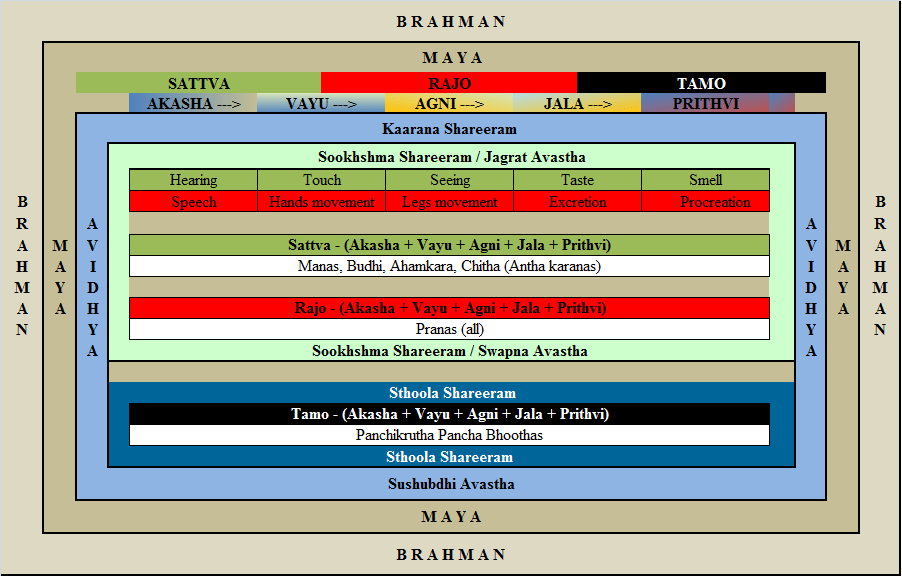
Let us start from the known.
1 day, 30 days, 12 months,
360 days = 1 human year HY
1 HY = 1 day for devas
360 deva days = 1 deva year
= 360 human years
1200 deva years = kaliyug
= 1200 * 360 = 4,32,000 HY
Kaliyug – 1 * 4,32,000
Dwapar – 2 * 4,32,000
Tretayug – 3 * 4,32,000
Satya yug – 4 * 4,32,000
1 Chaturyug = (4+3+2+1)
= 10 * 4,32,000 = 43,20,000 HY
= 1 Maha yuga

Brahma’s lifetime:
1000 chaturyug = 1 kalpa
= 1 Brahma day
2000 Chaturyug
= 1 Brahma day (& night)
= 2 kalpas
360 Brahma days = 1 Brahma year
100 years = 1 Brahma lifetime
= 1 Maha Kalpa
720 kalpas in a Brahma year,
i.e. (360 * 2), so 720
= 72,000 kalpas in Brahma lifetime

Manvantara:
1 Manvatara
= 1000/14 = 71.4 chaturyug

Between every Manvantara there is a juncture known as Sadhya which lasts for 4 * (4,32,000) years.

“Each Manvantara is followed by a deluge, which destroys the existing continents and swallows up all living beings, except the few who are preserved for the repeopling of the earth.”
So, 1 Brahma day
= 14 Manvataras + 15 sadhyas

All the 4 yugas keep repeating in a Manvatara, (around 71 times).
As 1 cycle is a Mahayuga, we are now in 28th Mahayuga in the current year of Brahma (51 years now).

Pralaya:
During the day time of Brahma creation happens and during night it is pralaya.
Naimithika pralaya:
At the end of the kalpa, there will be drought for 100 years. Sun will burn everything and evaporate all water from the oceans. The four worlds (Bhu, Bhuva, Suva, Maha and the 7 under Naga worlds) will completely burn down by a fire called samvartaka fire. Then the samvartaka clouds will unleash torrential rains and everything will be destroyed and dissolved into water. Brahma will go to sleep for a time equivalent to 1000 chaturyugas before waking up to create again. This is called Naimithika pralaya.
Praakritika pralaya:
At the end of Brahma’s period (lifetime), all the worlds are destroyed, each tatva will dissolve into the higher one ie:- prithivi together with subtle gandha tanmatra into jala and so on until only Paramatma remain in a state of equilibrium. This is called prakritika pralaya.
So, yugas (all 4 in order) should repeat 1000 times in 1 day of brahma. For example, Lord Rama will come in every Tretayuga, the Ramayana which we read is of this Mahayuga, but we don’t know what had happened in previous Mahayuga(s).

Kakabhushundi in Yoga Vasishtam, gave a reference by telling he saw Lord Rama 11 times on earth with different outcomes and seen Mahabharat 16 times with different results, but, after seeing Daksha Yagya twice, it ended the same way each time!
Ramayana occurs in the 24th Tretayuga of one kalpa. Mahabharata occurs in the 28th Dwaparayuga of one kalpa.
So, Mahabharata and the Ramayana happened in the current Vaivasvata Manvantara, in a day of Brahma.

नारायण अखिल गुरो भगवन् नमस्ते ।

Trip to Guruvayur

A trip to Guruvayur – Truly Unforgettable!

Sounds cliched? After all, every trip for all the travellers will turn out to be an unforgettable experience. But… this is certainly not one of them.

To begin with, after a not so materialistic, spiritual trip there will be feelings of blessings, satisfaction, self-contentment, may be also miracles. But what if there was more in store than what we could possibly think of?
Recently, blessed with an opportunity to attend a Narayaneeyam parayanam at the very place of its birth, in the presence of our Guru (actually Guru parampara). What more can we ask for?

Peace and satisfied with the parayana, as this was the first time, after we completed one cycle of learning from mami. Actually a kind of thaksgiving, from all of my friends. Though they could not be physically present, am sure all of their thoughts on this memorable sunday was at Guruvayur.

Also had the blessing to do samarpan of a small compilation that I thorougly enjoyed writing. Never thought, I could do it at Guruvayur. It was the very indication from Him that it was only His sankalpa and His alone.

The acceptance is His biggest blessing that indicates the learning in store for us. To be One with the absolute and that is all, there is no second!

The atmosphere was palpable due to the Bramotsavam, with the mighty elephant carrying the Lord at the Seeveli amidst the magnificient lighting of the lamps. And then, there He is happy and smiling 🙂

Felt the day was little too long, as we left with mixed feelings, of acceptance, the company of true friends, the motherly affection of the aunty who accompanied us, the bagavatas gathering at the parayana and the noisy crowd all over the town endowed with bakthi. It takes a while to sink in all those and allow the mystery to unravel itself one by one, which is the profound truth!

Surely, this was not one of those so many trips, though blessed with lots of learning, what to do, the mind keeps asking for more! And already awaiting the next visit 🙂

Design a site like this with WordPress.com
Get started